Insight3 min readEnergy and the grid
Transmission: why the grid has to go through farming country
AEMO's 2026 plan calls for about 6,000 km of new transmission by 2050. Why it is needed, and why it runs across farmland.
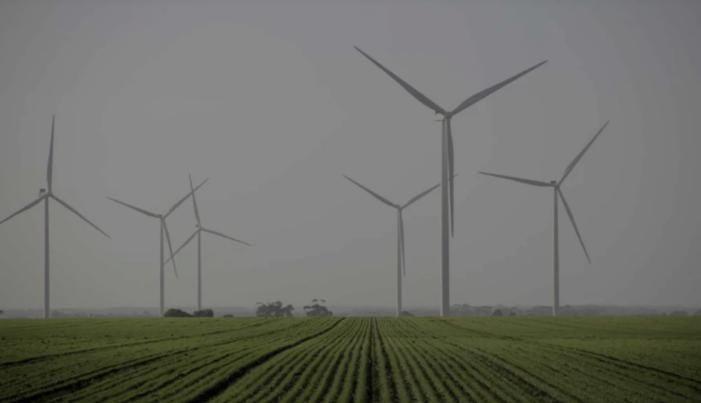
Of all the parts of the energy build-out, transmission is the one landowners feel most directly. A line is long, visible and permanent, and it crosses many properties to connect a few.
How much is planned
AEMO's 2026 Integrated System Plan identifies around 6,000 kilometres of new transmission needed by 2050. Commentary on the plan puts that at roughly a 14% expansion of today's network, with almost half already underway.
That figure has come down. The 2024 plan called for close to 10,000 kilometres. Since then, more storage and better siting of projects have reduced how much new line is needed to do the same job. It is a useful reminder that these plans change, and that the trend has been toward building less network, more carefully.
Why it is needed at all
The existing grid was built to carry power from a small number of large coal stations to the cities. Those stations sit on the coalfields: the Hunter, the Latrobe Valley, central Queensland.
The generation replacing them is in different places. Wind and solar are built where the wind and sun are strongest, which is often further inland and spread across a wider area. The network has to reach those places, and it has to be strong enough to move power between regions when the weather differs from one to the next.
Why it crosses farmland
Between where the power will be generated and where it will be used lies agricultural land. More than half of Australia's land area is used for agriculture, according to ABARES. Outside national parks and towns, a long straight corridor in eastern Australia will cross farms almost by definition.
Planners try to follow existing easements, property boundaries and less productive ground. They cannot avoid farms altogether.
What it means on the ground
For a grazing property, a transmission easement usually changes less than people expect. Stock graze under the line. The footprint of the towers is small. The restrictions are mainly on structures, tall machinery and some activities within the easement.
For cropping and irrigation the effect can be greater, because towers interrupt machinery runs and aerial operations. Where the line sits on the property matters a great deal.
There is also the construction period, the access tracks, biosecurity, and the simple fact of having other people on the place. And there is the question of what the landowner is paid, which has changed materially in several states in recent years.
The other side of the ledger
A line across a property is a burden. A strong network nearby is also the thing that makes other uses possible. Generation and storage projects need a connection, and land close to capable network is where they look first.
So transmission cuts both ways for landowners. The same infrastructure that takes an easement from one part of a district makes another part of it useful for something new.
Our view
We think owners should engage with network planning early and with good information, not treat it as something that simply happens to them. Routes move in response to well-argued local knowledge. Agreements vary. The difference between a well-placed easement and a poorly placed one lasts as long as the line does.
Sources
- AEMO, 2026 Integrated System Plan, as reported by Energy Networks Australia and CommBank Newsroom
- AEMO, Energy roadmap lights the way to net zero (2024 Integrated System Plan)
- ABARES, Snapshot of Australian Agriculture 2026
© InfraAg Management Pty Ltd ACN 679 804 061. The information on this website is general in nature and is not an offer of securities or financial product advice. See Disclaimer.
Insight
Data centres and regional land: what is being said, and what is known
Data centres are a fast-growing source of electricity demand. What AEMO has published, and what it means for rural land.
ReadInsight
Where Australia's electricity demand is heading, in plain terms
AEMO's 2026 Integrated System Plan expects electricity use to roughly double by 2050. A short guide to what is driving it.
Read