Insight3 min readHow we work
Two needs, one paddock
Australia needs its farmland to keep producing food and to host the energy system that is being rebuilt. Often it is the same land.
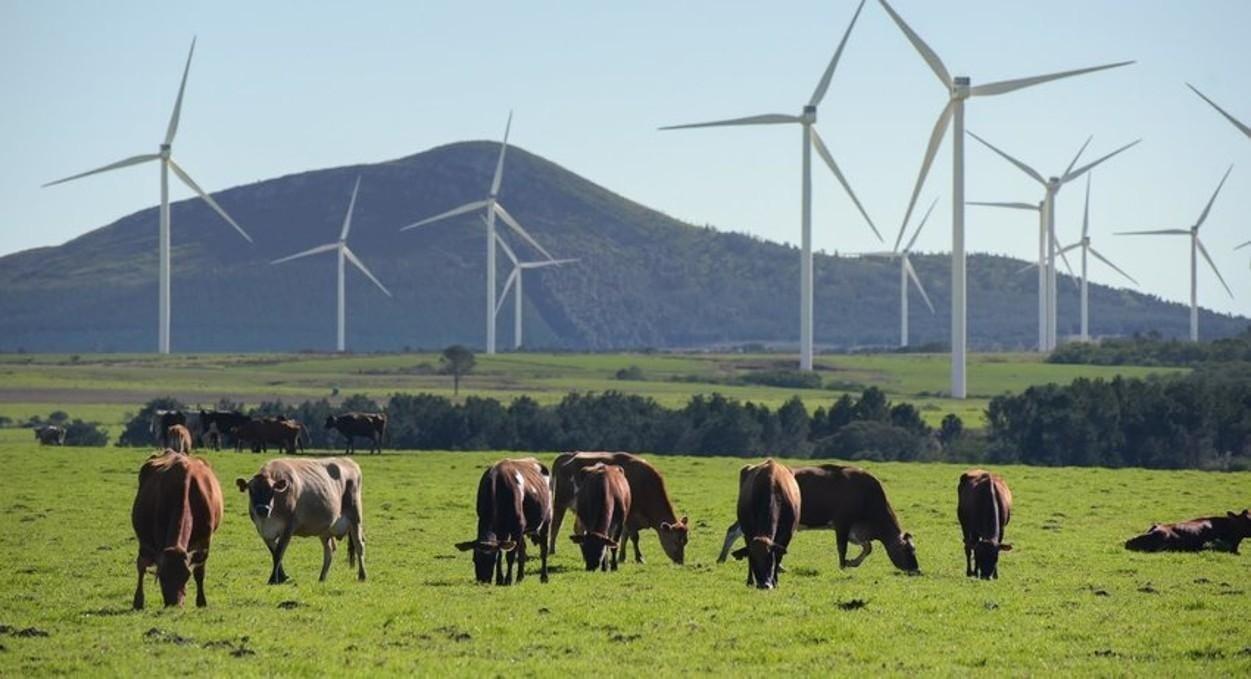
Australia is asking two things of its rural land at once.
The first is old. Farmland grows food and fibre, most of it for export. ABARES reports that agriculture accounts for more than half of Australia's land use, and that in the three years to 2024–25 the country exported 71% of what its farms produced, by volume. That is not going to change. If anything, the world will want more of it.
The second is new. The electricity system is being rebuilt. Coal-fired power stations are closing, demand is rising, and the generation, storage and transmission that replace the old system have to go somewhere. AEMO's latest Integrated System Plan expects electricity consumption across the National Electricity Market to roughly double by 2050. Much of the new infrastructure will be built in the regions, and a good deal of it on or across farming country.
The same land, not different land
It is tempting to think of these as competing uses: a paddock is either a farm or a solar farm. Sometimes that is true. More often it is not.
A transmission line crosses a grazing property and the cattle keep grazing under it. A battery takes up a few hectares beside a substation on a property of several thousand. A wind farm leaves most of the ground between its towers in production. Even where a project does take land out of agriculture, it is usually a small part of a larger holding.
So the practical question for most rural land is not "food or energy". It is how the two fit together on the same property, who decides, and whether the land is better or worse for it in thirty years.
Why ownership matters
Those decisions fall to the landowner. They are long-dated, they are hard to reverse, and they call on two kinds of knowledge that rarely sit in the same room.
One is agricultural: what the country can carry, where the good soil is, how water moves, what a lessee needs to run a sound operation. The other is about energy: where the network is strong, what a developer actually needs from a site, how approvals work, what a fair agreement looks like and what happens at the end of a project's life.
An owner with only the first kind of knowledge can be a price-taker in a negotiation they do not fully understand. An owner with only the second can treat good farmland as a blank site. Neither serves the land well.
How we see it
InfraAg was set up on a simple view. Productive agricultural land in the right regions will be asked to do more than one job over the coming decades, and it should be owned by people who understand both jobs.
For us that starts with agriculture. The farm keeps farming. Anything else has to suit the land, the operator and the community around it. Where it does, we think careful, long-term owners can make room for it without giving up what made the land valuable in the first place.
We will use these notes to set out how we think about that, drawing on published material rather than opinion wherever we can.
Sources
- ABARES, Snapshot of Australian Agriculture 2026
- AEMO, 2026 Integrated System Plan, as reported by Energy Networks Australia
© InfraAg Management Pty Ltd ACN 679 804 061. The information on this website is general in nature and is not an offer of securities or financial product advice. See Disclaimer.
Insight
Why we lease to operators and don't run the cattle ourselves
InfraAg owns land and leaves the farming to specialist operators. The reasoning behind that division of labour.
ReadInsight
What a proactive landlord does
InfraAg owns land and leases it to operators. What we think the owner's job is, and where it stops.
ReadInsight
Agriculture first: why the farm keeps farming
Productive capacity is the foundation of every property InfraAg owns. Why agriculture comes before anything else.
Read